
Metal-Free
No metal substructure; no grey discolouration at the gum margin or risk of metal allergy.
Metal-free, biocompatible and high-strength all-ceramic crown restoration. Natural appearance, long-lasting results.
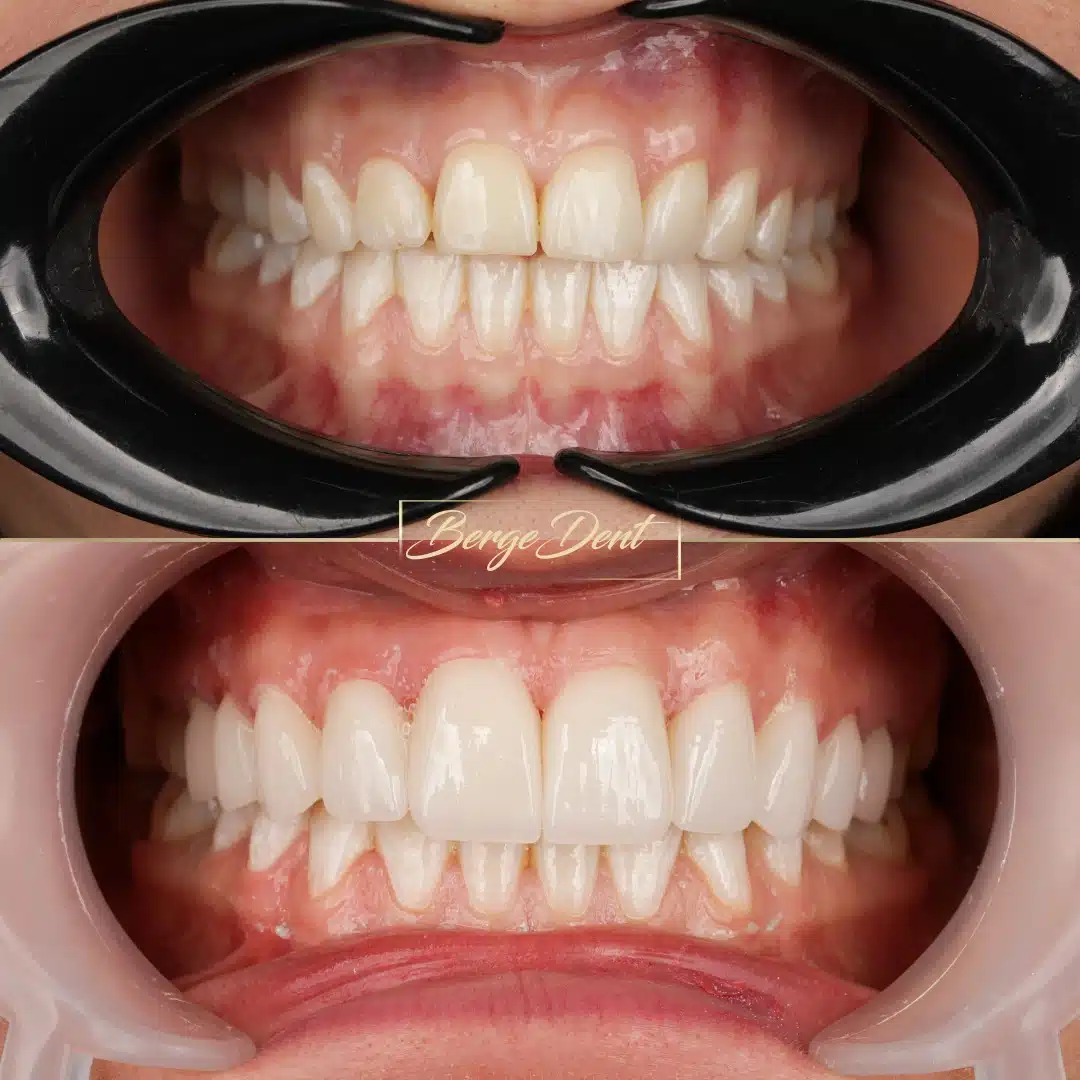
Function and esthetics
Zirconia restorations are planned to balance strength with natural light transmission.
A zirconia crown is a type of all-ceramic restoration that contains no metal substructure. The zirconium dioxide (ZrO₂) core provides high strength in the occlusal region, while aesthetic light translucency is achieved with a porcelain layer in the anterior region. Unlike metal-porcelain crowns, there is no risk of the grey line that can appear at the gum margin over time.
At Bergedent, monolithic zirconia (posterior group, high-force zones), high-translucency zirconia and e.max (lithium disilicate) materials are used in combination. Partial layering technique is preferred for the anterior group and full monolithic design for the posterior group.
Metal-Free
No metal substructure; no grey discolouration at the gum margin or risk of metal allergy.
High Strength
Monolithic zirconia is highly resistant to chewing forces with a fracture resistance of 1000–1200 MPa.
Biocompatibility
Porcelain and zirconia are tissue-friendly materials; their impact on gum health is significantly less than metal-porcelain crowns.
Natural Appearance
High-translucency and layered designs closely mimic the optical properties of natural teeth.
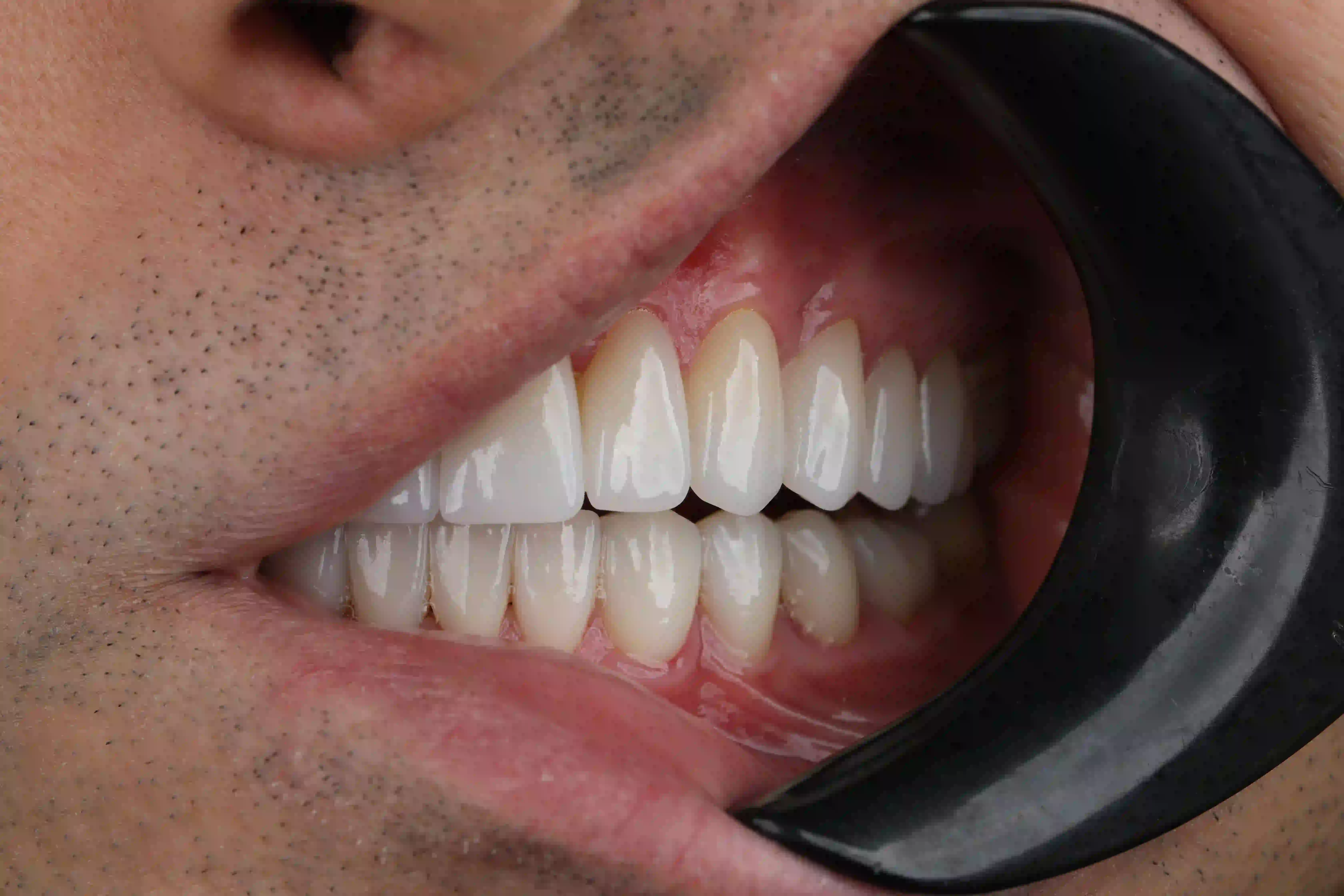
Full-arch coordination
Material thickness is adjusted for bite force, posterior durability, and anterior aesthetics together.
Examination & Planning
Gum health, occlusion and aesthetic expectations are assessed. Material selection is made.
Preparation
The tooth is reduced to the required extent; a digital or conventional impression is taken and a temporary crown is fitted.
Temporary Crown
The temporary crown protects tooth sensitivity while allowing aesthetics and function to be tested.
Final Crown Bonding
The delivered crown is checked for colour, shape and fit; following approval it is permanently cemented.
Clinical studies report success rates of 10–15 years and beyond under good occlusal and oral hygiene conditions. Bruxism and gum disease are the main factors that negatively affect longevity.
The porcelain surface has very high colour stability; however, superficial staining from excessive tea, coffee and smoking can occur and is removable with professional cleaning.
As long as marginal fit is maintained at the crown margin and oral hygiene is preserved, additional decay risk is minimal. However, subgingival decay can be seen with poorly fitting crowns or without regular check-ups.
This decision depends on the tooth's position and the individual's chewing forces. e.max offers superior aesthetics in the anterior group, while monolithic zirconia provides high strength in the posterior group. Your clinician will recommend the best option after examination.