
Minimal Bleeding
Laser cuts and coagulates simultaneously; bleeding control in soft tissue procedures is superior.
Gum contouring, laser-assisted whitening and soft tissue procedures — minimally invasive with rapid healing.
Soft-tissue precision
In the right indication, laser support improves control over bleeding and soft-tissue contouring.
Laser dentistry is a method that uses high-intensity light beams for precise cutting, coagulation and sterilisation of gums and soft tissues. Diode and Nd:YAG lasers are preferred for soft tissue applications; Er:YAG lasers are used in enamel and dentine procedures.
Compared to traditional scalpels, laser: improves bleeding control during the procedure, reduces post-operative pain and shortens healing time. Sutures are often not required. At Bergedent, laser is used primarily for gum contouring (gingivoplasty), laser-assisted gingival treatment and aesthetic finishing touches.
Minimal Bleeding
Laser cuts and coagulates simultaneously; bleeding control in soft tissue procedures is superior.
Rapid Healing
Laser's sterilising effect reduces infection risk; most sessions require no sutures.
Precise Cutting
Shaping the gum margin with µm precision directly improves veneer and crown aesthetic outcomes.
Patient Comfort
Vibration and heat are minimal; anaesthesia requirements are reduced in some procedures.
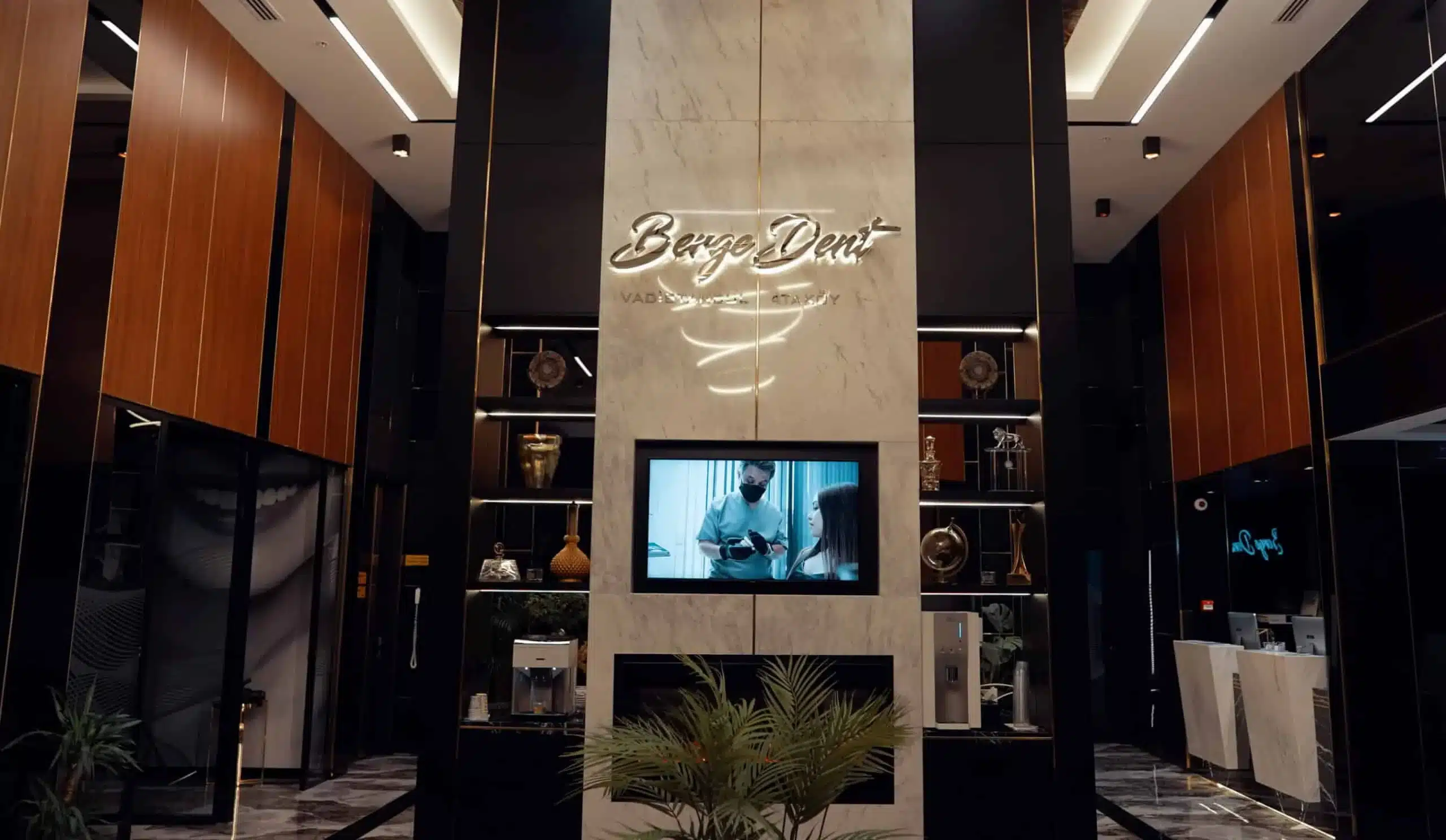
Treatment setting
Laser applications are often planned alongside esthetic, periodontal, and restorative treatment steps.
Indication Assessment
The clinician decides on the laser requirement. Gum health and coordination with the planned treatment are evaluated.
Anaesthesia & Protection
Topical or local anaesthesia is applied when necessary; protective eyewear is fitted.
Laser Application
The procedure is carried out with the selected laser device; parameters are adjusted according to tissue characteristics.
Aftercare
Sutures are not required in most cases; a healing check is usually performed one week later.
The procedure is carried out painlessly with topical or local anaesthesia. Mild sensitivity and swelling may occur afterwards; this generally resolves within 24–48 hours.
No. It requires a laser device; the type of device and the operator's training directly affect the quality of the output.
Tissue removed in gingivoplasty does not return. However, hypertrophy may recur due to chronic inflammation or hormonal causes; the underlying cause should be resolved before treatment.
No. The therapeutic uses of laser (periodontal pocket sterilisation, biostimulation) are also clinically effective. Aesthetic applications stand alongside these.